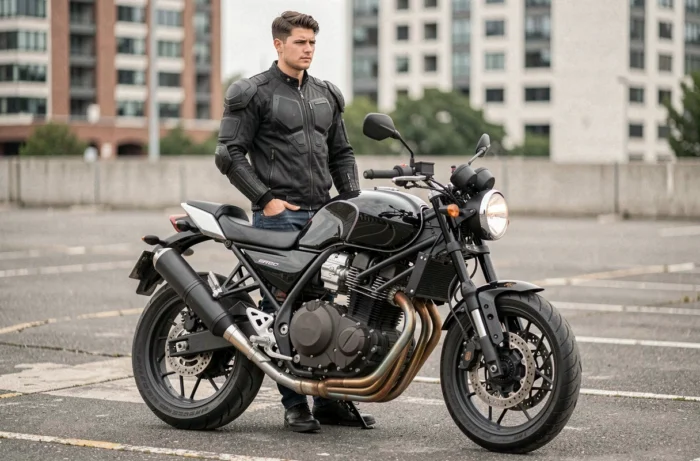
The A1 license and the A2 license do not grant access to the same motorcycles, do not target the same audience, and do not open the same opportunities for advancement. Behind this administrative distinction lie concrete choices that commit several years of practice. The French regulatory framework structures a progressive path, from lightweight two-wheelers to motorcycles without power limitations, but the financial and practical implications of each category deserve close examination.
Out-of-pocket expenses for CPF and reform of the A2 test: what has changed recently
Two recent developments modify the calculation for candidates. Since May 2024, a remaining charge of 100 euros applies to any license training funded by the CPF. This applies to both the A2 license and the bridge to the A license.
For those who were counting on full funding through their Personal Training Account, this additional cost changes the game. It does not call into question the value of the system, but it forces one to anticipate an extra expense in the overall budget.
On the examination side, a decree from October 14, 2025, has reduced the duration of the A2 license circulation test: 32 minutes instead of 40, with a self-driving phase reduced from 10 to 5 minutes. This shorter format allows inspectors to conduct more candidate tests per day. The direct consequence is a reduction in waiting times to obtain an exam date in several departments. If you are hesitating between A1 and A2 partly due to waiting lines, this factor now weighs in favor of the A2.
Understanding the difference between the A1 and A2 licenses also requires taking into account these recent adjustments, which modify the concrete conditions of access to each category.
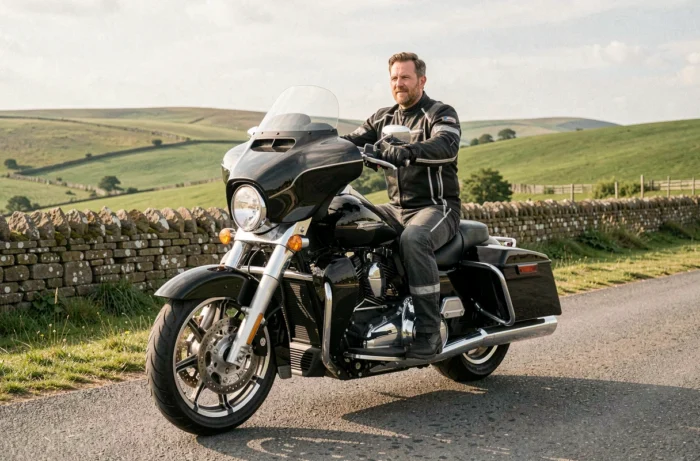
A1 License: minimum age, engine size, and power limits
The A1 license is accessible from 16 years old. It allows the operation of lightweight motorcycles with an engine size not exceeding 125 cm3, as well as motor tricycles. The maximum power is capped at 15 kW, with a power-to-weight ratio limited to 0.1 kW/kg.
To obtain it, the candidate must pass two tests:
- The motorcycle theoretical test (ETM), separate from the car code, with a minimum of 35 correct answers out of 40 questions.
- The practical test, which includes an off-road exercise (platform) and a road exercise.
The A1 license corresponds to urban or suburban use on lightweight machines. It does not provide access to the bridge to the A license. This is a point that many candidates discover too late: the A1 is an independent license, with no direct progression to more powerful motorcycles.
A2 License: access to medium-powered motorcycles and bridge to the A license
The A2 license requires being at least 18 years old. It allows the operation of motorcycles with a power not exceeding 35 kW, with no limitation on engine size (a 600 cm3 motorcycle restricted to 35 kW is eligible). The power-to-weight ratio must not exceed 0.2 kW/kg.
The tests are identical in structure to those of the A1: ETM followed by a practical test (platform and road). However, the platform exercises are conducted on heavier motorcycles, and the maneuverability requirements are higher.
The bridge to the A license
This is the main advantage of the A2. After two years of holding the A2 license, the holder can take a supplementary training of 7 hours to obtain the A license, which removes any power limitation. Specifically, an A2 license obtained on August 1, 2025, opens access to this training starting May 1, 2027 (the calculation of the two years takes into account the administrative validation period).
The A1 license does not provide access to this bridge. A holder of the A1 wishing to transition to motorcycles over 15 kW will need to undergo complete A2 training, with new tests.
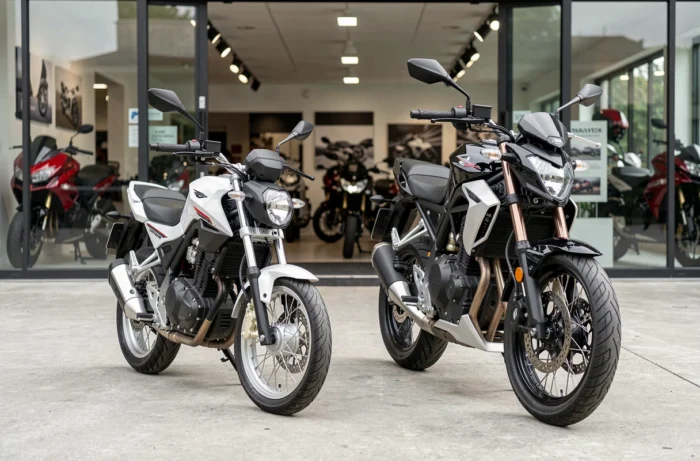
Choosing between A1 and A2 licenses: the criteria that really matter
The choice is not just a matter of power. Several parameters come into play, and their hierarchy depends on the candidate’s personal situation.
- Age at the time of registration: at 16 years old, only the A1 is accessible. If you are 17 and a half, waiting a few months to take the A2 directly may be more beneficial in the long run.
- The driving project: for strictly urban use on a 125 cm3 scooter, the A1 is sufficient. To consider road motorcycles or progress to the A license, the A2 is the only logical path.
- The budget: the training cost is comparable between A1 and A2 in most driving schools. However, the A2 opens future access to the A license through a 7-hour training, which is much less expensive than a full license.
- CPF funding: the A2 license and the A bridge are eligible for CPF. The A1 is also eligible, but the remaining charge of 100 euros applies in both cases since 2024.
An 18-year-old candidate or older who chooses the A1 for perceived simplicity deprives themselves of the progression toward the A license. This is not a bad choice if the project is limited to the 125 cm3, but it is a definitive choice in terms of the licensing path.
The A2 license remains the only one that opens a complete trajectory toward unrestricted power driving. For a motorcyclist looking beyond the initial years of practice, this is a hard argument to ignore. The A1 retains its relevance for minor drivers or those whose needs are limited to a lightweight two-wheeler, without ambitions to progress to more powerful machines.