
When moving to one of the 19 municipalities of the Plaine du Rhin, the first difficulty is not finding a bakery, but knowing whom to contact for waste collection, nursery registration, or connections.
The Community of Municipalities of the Plaine du Rhin (CCPR), headquartered in Beinheim, encompasses around 18,400 inhabitants over approximately 150 km² in the far northeast of the European Community of Alsace, along the German border. Its role goes far beyond administration: it structures the daily lives of residents on topics as varied as early childhood, housing, and mobility.
One-stop shop and access to services in the Rhine territory
Before the establishment of the CCPR welcome booklet, published in the summer of 2026, each newcomer had to navigate between their municipality’s town hall, inter-municipal services, and external partners. The booklet formalizes a logic of one-stop entry point for local information: a single document summarizes the community’s competencies, useful contacts, and common procedures.
In practical terms, the CCPR is administered by a council of 31 elected members, with representation proportional to the population of each municipality (one seat for each commenced 1,000 inhabitants). Seltz has 5 seats, Lauterbourg has 4, and both Beinheim and Mothern have 3 each. The remaining 14 municipalities each send one representative. All practical information, from mandatory competencies to cultural activities, can be consulted on cc-rhin.fr, which serves as the digital entry point to the territory.
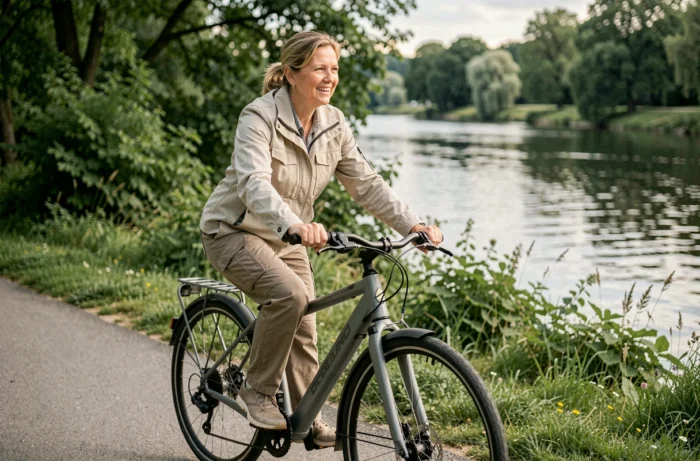
Inter-municipal competencies in Alsace: what the CCPR manages daily
Three levels of competencies are distinguished in a community of municipalities: mandatory, optional, and discretionary. On the ground, this hierarchy has a direct impact on the services accessible without going through one’s town hall.
Mandatory and optional competencies
Economic development and spatial planning are part of the mandatory foundation. The CCPR also intervenes in waste collection and treatment, as well as in the management of shared sports and cultural facilities.
On the optional side, early childhood and after-school care constitute a particularly visible aspect for families. The territory offers childcare structures whose coordination is ensured at the inter-municipal level, avoiding duplication between neighboring municipalities.
Discretionary competencies and partnerships
The CCPR has chosen to exercise discretionary competencies in cultural activities and partnerships with external structures. This includes cultural mediation actions and collaborations with local associations, which vary according to the seasons and available funding.
- Economic development and land use planning (mandatory)
- Waste collection and management of sports facilities (mandatory and optional)
- Early childhood, after-school care, and family reception structures (optional)
- Cultural activities, associative partnerships, and local events (discretionary)
Territory project 2026-2030: housing, mobility, and quality of life in the Plaine du Rhin
The diagnosis carried out by ADEUS for the territory project 2026-2030 highlights a particular demographic profile. The Plaine du Rhin is a more family-oriented territory than the average in Bas-Rhin, with a positive migratory balance but a natural balance that tends to become negative. The number of births is no longer sufficient to compensate for natural departures, yet housing construction continues to grow.
This apparent paradox is explained by the residential attractiveness of the area for already established households, often coming from the Strasbourg agglomeration or the employment zone of Haguenau. The territory project aims to articulate this pressure on housing with supra-municipal planning documents (SCoT, PCAET) and regional priorities regarding energy transition.
Daily mobility and carbon footprint
The territory is served by the Bas-Rhin Transport Company (CTBR), whose 2025 environmental data indicate that a bus in service emits an average of 0.949 kg of CO₂ per kilometer. This figure allows for a comparison of the impact of an intercity bus trip with that of an individual car trip, a daily choice for residents of municipalities far from train stations.
Feedback varies on this point: some users find the frequencies sufficient for commuting, while others believe that a car remains necessary as soon as one leaves the main roads. The territory project 2026-2030 identifies mobility as a central issue, with a desire to strengthen connections between the five municipalities along the Rhine (Beinheim, Seltz, Munchhausen, Mothern, and Lauterbourg) and the rest of the network.
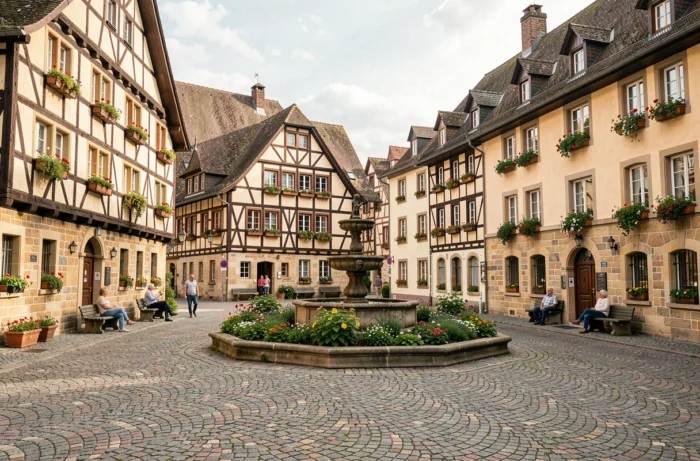
Local life and community initiatives along the Rhine
Beyond formal competencies, the CCPR fosters a network of initiatives that shape the quality of life. The cultural activities coordinated at the inter-municipal level allow for the pooling of resources that the smaller municipalities (Croettwiller, Trimbach, Wintzenbach) could not mobilize alone.
The administrative attachment to the district of Haguenau-Wissembourg and membership in the PETR of the northern Rhine band situate the CCPR within a larger territorial framework. This border positioning with Germany opens up prospects for cross-border cooperation, particularly on employment and health service issues.
- Five municipalities directly along the Rhine, with specific issues of riverbank management and flood prevention
- A PETR shared with the Rhine Country, facilitating supra-municipal projects
- Cross-border partnerships with neighboring German communities, particularly around Scheibenhard
The CCPR welcome booklet summarizes the territory’s approach: centralize information without centralizing decisions. Each municipality retains its identity and its own competencies, while inter-municipality takes charge of what works best on a larger scale. For residents, the challenge remains knowing exactly which contact person to reach out to, and that is precisely what the one-stop shop aims to resolve.