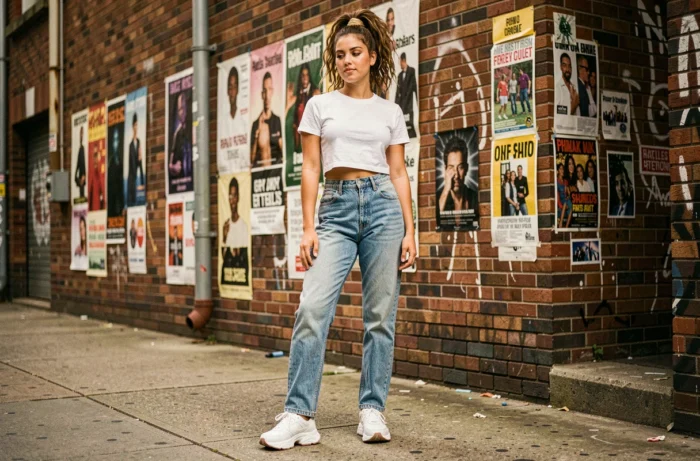
Which pieces from the 90s have truly survived the cycles of fashion, and which are merely ephemeral resurgences driven by nostalgia? Between grunge, minimalism, and streetwear, the trends of this decade do not all return with the same intensity or longevity. A recent regulatory factor is also reshuffling the deck: the influx of vintage pieces in the second-hand market is significantly altering the available supply.
90s pieces still worn today versus disappeared trends: comparative table
Not all 90s trends have the same potential for a comeback. Some pieces have been permanently integrated into contemporary wardrobes, while others remain confined to costume parties.
| 90s piece or style | Current presence | Wearing context |
|---|---|---|
| High-waisted jeans | Massively adopted | Everyday, office, outings |
| Crop top | Seasonal (summer) | Casual, festivals |
| Oversized leather jacket | Strong in mid-season | Streetwear, parties |
| Satin dress | Cyclical (runways) | Occasions, “quiet luxury” trend |
| Baggy pants | Marked return | Streetwear, hip-hop |
| All-denim look | Persistent | Casual, editorial |
| Grunge plaid patterns | Niche | Subcultures, autumn |
| Platform shoes | Cyclical | Parties, editorial looks |
The high-waisted jeans and oversized jacket stand out for their adoption in everyday wardrobes, not just in capsule collections or editorials. The baggy pants are experiencing a second life driven by streetwear and hip-hop, two movements that originally drew from 90s codes.
In contrast, grunge plaid patterns or platform shoes remain occasional style markers. Their return depends more on runway shows than on actual demand on the streets.
To better understand what people actually wore back then, a detailed look at 90s fashion helps measure the gap between clothing mythology and everyday outfits.
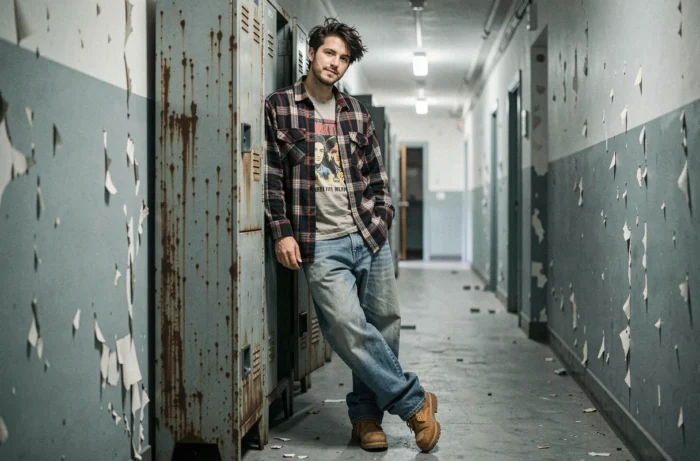
Grunge, minimalism, streetwear: three 90s movements with opposing trajectories
The 90s do not form a homogeneous stylistic block. Three movements coexisted, sometimes opposing each other, and their current influence diverges.
Grunge: a niche style that has become confidential again
Grunge combined plaid shirts, ripped jeans, boots, and deliberately neglected layering. This style, linked to the Seattle music scene, functioned as a rejection of luxury codes. Today, grunge only appeals to a small segment of the market. Pieces circulate in thrift stores, but major brands only reintegrate it sparingly into their autumn-winter collections.
Minimalism: the trend most absorbed by current fashion
Clean cuts, reduced palettes, understated materials. The 90s minimalism, characterized by streamlined silhouettes, has merged into what is now called “quiet luxury.” The difference between a 90s minimalist look and a contemporary high-end outfit often comes down to minor details: a dress cut, a choice of knitwear.
90s minimalism has not returned; it never really disappeared. Professional wardrobes and mid-to-high-end ready-to-wear collections have continuously referenced it.
Streetwear and hip-hop: the most visible comeback
Baggy pants, chunky sneakers, prominent logos, caps: 90s streetwear is experiencing the most spectacular resurgence. Sportswear brands are reissuing shoe and clothing models directly inspired by that era. Accessories (fanny packs, chains, tinted glasses) complete looks that borrow from both hip-hop and the skate culture of the decade.
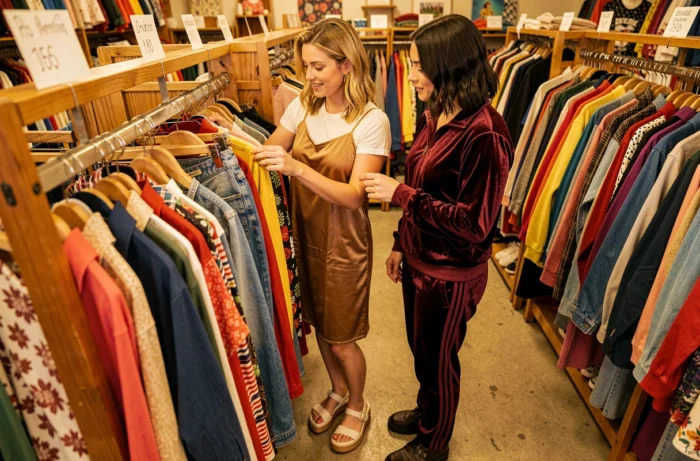
90s vintage accessories and European regulation on unsold goods
A recent phenomenon is changing the availability of 90s pieces in the second-hand market. Since July 19, 2026, large fashion companies operating in the European Union can no longer destroy their unsold clothing, shoes, and accessories. This ban stems from the European regulation on the eco-design of sustainable products (ESPR, regulation (EU) 2024/1781).
Brands must direct these stocks towards resale, donation, or reuse. This mechanism directly feeds into the second-hand and vintage circuits.
According to specialized analyses, more quality pieces are entering the vintage circuit, including 90s style bags, belts, jewelry, and glasses that would have never left warehouses a few years ago. This regulatory shift contributes to the visible rise of 90s accessories in urban looks.
- Structured handbags and wide belts, typical of the decade’s style, are more easily found in thrift stores and on resale platforms.
- Tinted glasses with fine frames, long considered dated, are reappearing in streetwear.
- Solid silver or resin jewelry, signatures of 90s accessories, benefit from this influx of redirected stocks.
Medium-sized companies will be subject to the same obligation starting in 2030, which should further amplify this phenomenon. Micro and small businesses remain exempt for now.
90s trends in recent collections: what the runways confirm
The runways of recent seasons allow us to distinguish structural comebacks from fleeting fashion effects. Satin dresses and slip dress cuts regularly reappear, but their presence remains tied to summer collections or evening lines. The all-denim look, on the other hand, crosses seasons without weakening.
Crop tops, massively worn in the 90s, are now limited to summer and casual use. Their return in collections does not come with as wide an adoption as at the time, when they were worn from the office to the beach.
The most enduring 90s style is the one that has adapted: oversized cuts integrated into work wardrobes, denim reimagined in more refined finishes, vintage accessories mixed with contemporary pieces. The trends that survive are those that do not require a complete “costume” to function.
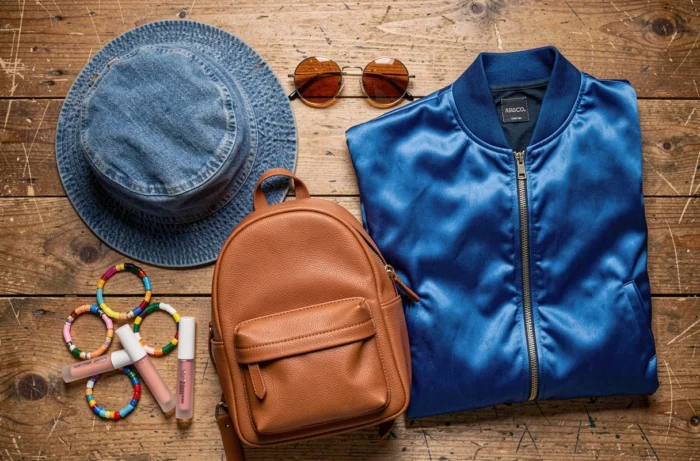
The return of 90s pieces is not solely based on nostalgia. The European ban on the destruction of unsold goods is significantly altering the second-hand offer, and the enduring trends are those that seamlessly blend into a current wardrobe without the need for a complete reconstruction. Minimalism and streetwear meet this condition, while grunge much less so.