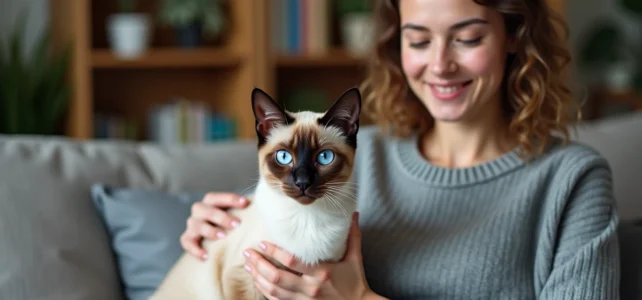
A Siamese crossbreed cat is the result of a mating between a Siamese and a cat of another breed or a domestic cat. This crossbreeding often produces an animal that retains the recognizable physical traits of the Siamese (blue eyes, colorpoint coat, slender silhouette) while inheriting a more diverse genetic background. For a family looking for a sociable and resilient feline companion, this profile deserves special attention.
Hybrid vigor of the Siamese crossbreed cat: what genetics changes
The purebred Siamese has known predispositions to certain pathologies, notably renal amyloidosis and strabismus. A cross with another lineage broadens the genetic pool of the kitten and reduces the likelihood of concentrating these hereditary weaknesses.
Further reading : The Latest Trends and Essential Tips for Preparing Your Next Trip
This phenomenon, sometimes referred to as hybrid vigor, concretely translates into increased robustness. Siamese crossbreeds typically exhibit a slightly longer lifespan than the LOOF Siamese, whose life expectancy already ranges between 15 and 20 years. A cat that lives long and gets sick less often also means a more predictable veterinary budget for the family.
Families wishing to adopt a Siamese crossbreed cat thus find an animal that combines the appearance of the Siamese with a generally sturdier constitution, without the constraints of specialized medical follow-up from the early years.
You may also like : Why non-woven white wallpaper is the ideal solution for rentals
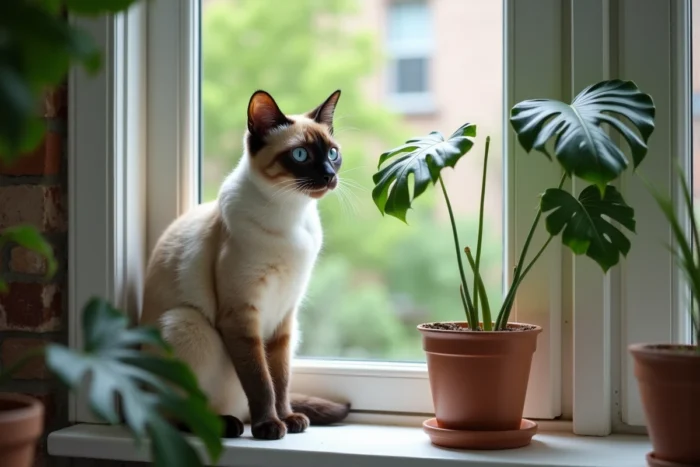
Character of the Siamese crossbreed: sociable temperament and family life
The purebred Siamese is known for its close-knit, vocal, and sometimes exclusive character. It tends to bond with a particular person and can be possessive. The Siamese crossbreed generally inherits this sociability, but the genetic mix softens the most extreme behaviors.
Tolerance towards children
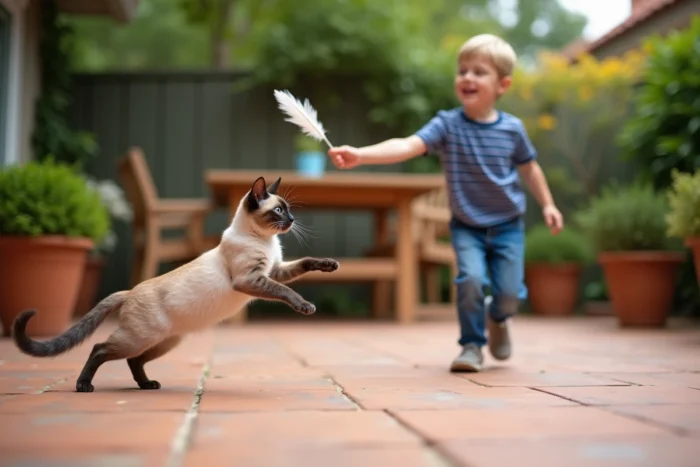
A purebred Siamese does not tolerate abrupt movements well and may react strongly to clumsy handling. The Siamese crossbreed retains the patience of the domestic cat while keeping the playful and interactive nature typical of the Siamese. This balance makes it a better companion for families with young children.
Coexistence with other animals
Early socialization remains crucial, but feedback from adopters at shelters shows that Siamese crossbreeds integrate more easily into multi-pet households. Their playful temperament without being dominant facilitates coexistence with a calm dog or another cat.
The vocal character of the Siamese does not completely disappear in the crossbreed. Expect a cat that “talks,” but with a volume and frequency generally more moderate than that of the purebred Siamese.
Adopting from a shelter: costs, procedures, and health guarantees
Siamese crossbreed cats are among the most common profiles in French shelters. Their recognizable coat and endearing character make them popular, but the supply regularly exceeds the demand.
The adoption cost at a shelter ranges between 150 and 250 euros, including sterilization, identification by microchip, and initial vaccination. In comparison, a Siamese kitten registered with the LOOF costs between 800 and 1,500 euros from a breeder, not including initial veterinary expenses borne by the buyer.
This price differential does not reflect a difference in the quality of the animal. The health package provided by the shelter covers the most costly procedures during the first year of the cat’s life:
- Surgical sterilization, which alone represents a significant budget at a city veterinarian
- Identification by microchip, mandatory for any transfer of ownership of a domestic animal in France
- Initial vaccination and parasite treatment, ensuring a solid health foundation from the time of adoption
For a family, adopting a Siamese crossbreed from a shelter means obtaining a socialized, medically monitored cat ready to live in a home for a fraction of the price of a purebred cat.
Feeding and daily care of the Siamese crossbreed cat
The short coat inherited from the Siamese requires minimal maintenance. A weekly brushing is sufficient to limit shedding, a practical advantage when children share the couch with the cat.
In terms of diet, a food rich in animal proteins remains the foundation, as with any cat. The Siamese crossbreed does not have specific nutritional needs compared to a standard domestic cat. High-quality kibble with a high protein content and low grains is perfectly suitable.
Two points of attention should be noted:
- The Siamese crossbreed often retains the active metabolism of the Siamese, which means a slightly higher caloric requirement than that of a sedentary cat. Daily play sessions and a cat tree are sufficient to channel this energy
- The Siamese’s close-knit tendency implies that the crossbreed does not handle prolonged solitude well. For a family where at least one member is present part of the day, this trait becomes an asset: the cat actively seeks contact and participates in family life
Siamese crossbreed or purebred Siamese: criteria for family choice
The purebred Siamese is suitable for households looking for a precise physical standard and who are willing to commit to more attentive veterinary care. The Siamese crossbreed is aimed at families who prioritize robustness, budget control, and a balanced temperament.
The Siamese crossbreed is the most coherent compromise for a first family cat. It combines the aesthetics and sociability of the Siamese without the financial and medical constraints of a LOOF registered purebred cat. Adopted from a shelter, it arrives in the home with a complete health foundation and socialization already initiated by volunteers.
The choice between the two often comes down to a question of priority: adherence to the standard appearance or daily sturdiness. For the majority of families with children, the latter option prevails.