
A thyme producer in Ardèche has seen his orders explode over the past two years. A Parisian herbalist turns away customers on Saturday mornings. A pharmacist receives questions about rosemary with verbenone, whereas five years ago he was asked about paracetamol. Medicinal plants occupy a concrete space, well beyond mere trends. The global market for natural health medicines, projected to exceed $137 billion by 2034, confirms this underlying dynamic.
Chemotypes of medicinal plants: why the vernacular name is not enough
Rosemary is purchased in bulk or as an essential oil, used for digestion or concentration, and people are surprised that the results vary. The problem is rarely the plant itself, but the chemotype.
You may also like : Discover the essential trends and news in digital marketing for 2024
Rosemary exists in at least three distinct chemotypes, each with a different chemical profile and uses. The cineole chemotype is oriented towards the respiratory sphere. The verbenone chemotype targets the liver and cellular regeneration more. The camphor chemotype is used primarily for muscle pain.
Two bottles labeled “rosemary” are not equal in medicinal use. This intra-species chemical diversity is an angle that most mainstream content ignores, even though it directly affects the effectiveness of a preparation.
You may also like : The latest fashion trends and inspirations to discover this season
In practice, one checks the label: the full Latin name (Rosmarinus officinalis ct. verbenone, for example) and the producing organ (leaf, flowering top) are the two minimum pieces of information. Without these specifics, one buys blindly. The news from L’Herbe sous le Pied allows for in-depth tracking of such topics, with a perspective grounded in practice.
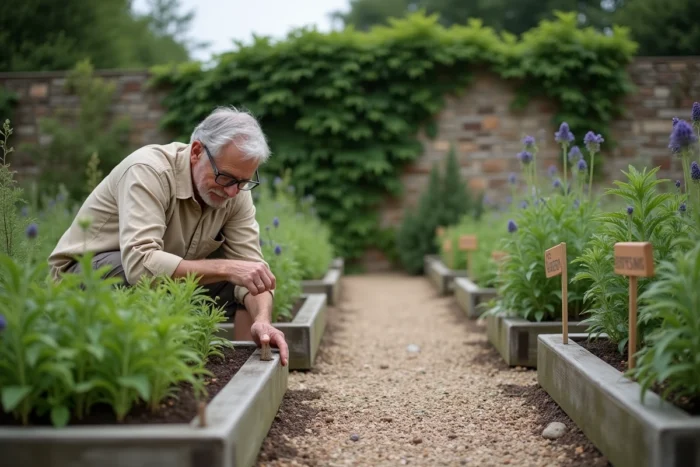
Pharmaceutical forms of plants: herbal tea, extract or capsule according to use
The form in which a plant is consumed changes everything. A herbal tea of lemon balm does not have the same dosage of active ingredients as a hydro-alcoholic extract from the same batch. It is not a question of quality, but of concentration and bioavailability.
Herbal tea and infusion: a daily use at low concentration
Herbal tea remains the most accessible form. It mainly extracts water-soluble compounds (flavonoids, mucilages, light tannins). For a plant like chamomile or verbena, it is suitable for regular and moderate use.
On the other hand, for plants whose active ingredients are poorly soluble in water (like St. John’s wort or turmeric), herbal tea only delivers a fraction of the potential. We then move on to other forms.
Extracts and mother tinctures: when precision matters
Mother tinctures and fluid extracts offer a higher and more stable concentration. One can dose precisely, which matters when aiming for a targeted effect.
- Hydro-alcoholic extracts retain a broad spectrum of molecules, including those insoluble in water alone
- Standardized dry extracts (in capsules) guarantee a fixed percentage of active ingredient per dose, useful for St. John’s wort or ginkgo
- Glycerin macerates of buds (gemmotherapy) exploit the embryonic tissues of plants, with a different action profile than adult parts
The choice of pharmaceutical form depends on the plant and the intended goal, not on a comfort preference. Feedback varies on this point among practitioners, but the consensus leans towards case-by-case adaptation.
Medicinal plants and supply chains: a resilience issue
The UN reminds us that flora supports local economies, human health, and ecological balance. This is not a slogan: when a species is overexploited, an entire sector falters.
Every day, we destroy plants whose molecules we do not yet know. This observation, made on the occasion of World Wildlife Day 2026 dedicated to medicinal and aromatic plants, reflects a concrete problem for medical research. A large part of the plant therapeutic potential remains unexplored, and every hectare of lost tropical forest carries away compounds that have never been studied.

On the ground, this translates into supply tensions. Producers of medicinal plants in West Africa see demand increase without sustainable cultivation sectors keeping pace. The medicinal plant sector is gaining ground on this continent, but the structuring of value chains remains an open project.
Phytotherapy trends 2026: what is changing in practices
Three movements are clearly emerging this year in the use of medicinal plants.
The first concerns the scientific validation of traditional uses. Ethnopharmacology, the discipline that studies traditional remedies to confirm or refute their benefits, is gaining visibility. Madagascar periwinkle, whose alkaloids are used in oncology, illustrates this transition from traditional medicine to clinically validated treatment.
The second movement relates to extraction methods. Researchers have developed processes to extract therapeutic compounds from parts of plants previously considered waste (stems, secondary roots). This opens the door to a more complete use of plant biomass.
The third movement, less visible but equally structuring, focuses on the traceability of medicinal plants from field to bottle. Consumers now demand geographical origin, cultivation conditions, and drying methods. Organic labels are no longer sufficient: we want to know if the plant was harvested at the right phenological stage, which directly influences its active ingredient content.
- Check the chemotype and the producing organ with every purchase of essential oil or extract
- Favor suppliers who indicate the cultivation location and harvest date
- Adapt the pharmaceutical form to the intended use rather than the most convenient format
Medicinal plants are no longer a niche subject reserved for herbalists. They are becoming part of the daily lives of millions of people, with an increasing demand for precision. The quality of a medicinal plant is judged by its chemotype, its form, and its traceability, not by its packaging.