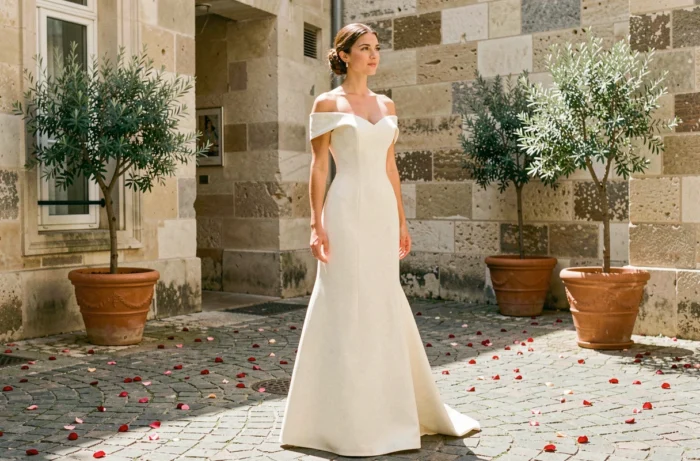
The French wedding market has been undergoing a structural shift for the past two years. Budget allocations, the format of celebrations, and the chain of service providers are being reconfigured due to new behaviors, primarily driven by couples aged 18-34. Here, we decode the changes that have been less documented by the mainstream press.
Wedding Content Creator: A Distinct Expense from the Videographer
The “social content” budget line has become independent. The content creator (sometimes referred to as reel maker or content creator) does not replace the traditional photographer or videographer. Their scope includes live streaming, stories, Reels, and coordinating with guests to capture spontaneous moments.
This distinction alters the timing on the big day. The schedule now includes dedicated slots for “Instagrammable” moments, which requires the wedding planner to synchronize three distinct captures instead of two. The overall cost of the image service mechanically increases.
We observe that couples who follow the news from Univers Mariage identify this expense very early in their planning timeline, often even before securing the caterer. The reason is pragmatic: the content creator influences the choice of venue and staging, as some spaces are better suited than others for producing short formats.
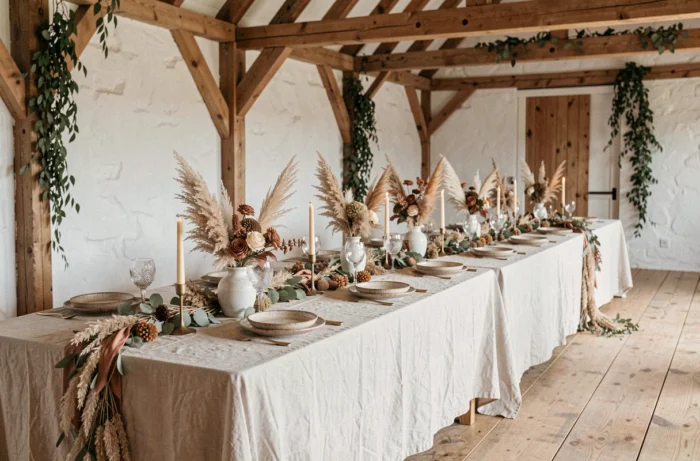
Two-Day Weddings: Tight Budget, Expanded Experience
The weekend format is no longer a luxury reserved for destination weddings. In France, the extension of festivities over two days is rapidly gaining popularity among young couples. The principle is based on a clear trade-off: reduce the number of guests to fund an extended format.
In practice, couples prioritize the overall experience (on-site accommodation, next-day brunch, shared activities) over a single high-capacity reception. This logic alters the structure of quotes: the accommodation and Sunday catering expenses appear as new lines, while the floral budget or evening entertainment budget decreases proportionally.
Consequences for Venue Choice
A weekend wedding requires a venue that can be privatized for the duration. Properties with integrated accommodation (adjacent cottages, on-site guest rooms) are capturing this demand. Traditional reception halls rented by the day are losing attractiveness among this segment.
Field feedback also shows the emergence of spa or wellness services the day after the ceremony, a service once limited to high-end weddings that is becoming more accessible due to the reduced number of guests.
High-End Venues and Young Couples: A Counterintuitive Trend
Competing articles emphasize rustic, bohemian, or nature-themed atmospheres. They overlook a documented movement: the upgrading of venues chosen by those aged 18-34. Five-star hotels, historic properties, classified estates: these locations are no longer reserved for budgets exceeding six figures.
Several factors explain this shift. Reducing the number of guests frees up a significantly higher budget per person. Social media highlights remarkable architectural settings, enhancing the appeal of venues with strong visual identities. The resurgence of weddings among younger generations, echoed by national media, is accompanied by a stated desire for a “dream wedding.”
- Historic properties with French gardens, favored for outdoor secular ceremonies and sunset photo sessions.
- High-end hotels offering internal coordination (catering, accommodation, logistics), simplifying organization for couples without a wedding planner.
- Vineyards or olive oil estates that combine a premium setting with local roots, a rising criterion among couples sensitive to the provenance of served products.

Secular Ceremony and Enhanced Personalization of the Ritual
The secular ceremony is no longer a marginal alternative. It has become the dominant format among couples who wish to control every sequence of their union. The officiant for the secular ceremony has become a strategic provider, often booked several months in advance.
What changes in practice: symbolic rituals diversify well beyond the classic sand or candle rituals. We recommend that couples treat their ceremony as a true script, with calibrated interventions, a pre-planned soundtrack, and a controlled duration (rarely exceeding forty-five minutes).
Impact on Coordination of Service Providers
The photographer, videographer, and content creator must receive the exact schedule of the ceremony before the big day. Key moments (exchange of personalized vows, reading by a loved one, collective ritual with guests) dictate the placement of captures. Without a precise brief, the images lack narrative coherence.
- Provide the ceremony schedule to all image providers at least two weeks before the date.
- Plan a light scouting at the ceremony venue, especially outdoors where the sun’s orientation changes with time.
- Designate a logistics referent (witness or wedding planner) to coordinate guest movements between the ceremony and the cocktail.
The wedding version 2024 is structured around clearer choices: fewer guests, more budget per person, specialized providers for digital content, and venues that serve both the lived experience and the projected image. Organization is no longer thought of as a list of items but as a global scenario, where each decision made in advance conditions the quality of the final outcome.