
Article 50 of the European AI Act came into effect on August 2, 2026. This single fact reshuffles the deck for all high-tech products incorporating generative AI, from smartphones to voice assistants. This year’s tech trends are not just about product announcements: they are reflected in regulatory constraints, hardware architecture choices, and industrial trade-offs that most mainstream compilations overlook.
AI Act article 50: the regulatory constraint redefining tech products in 2026
Since August 2, 2026, any generative AI system deployed in Europe must inform the user that they are interacting with artificial intelligence. Generated or manipulated content must carry a machine-readable marking. The penalty regime is severe: up to 3% of global revenue or €15 million for non-compliant providers.
Models already on the market benefit from a grace period until December 2, 2026, to adapt their marking, but this reprieve does not cover new deployments. In practice, every smartphone manufacturer, every photo app publisher, or creative platform must revisit their content flows and interfaces.
We observe that this obligation transforms the product cycle. A voice assistant that generates text, a camera whose computational mode edits photos, a video editing tool incorporating synthesis: all must integrate provenance metadata. Product teams that had planned a European launch in the second half of the year have had to realign their roadmap to include this layer of compliance, which is one of the most followed topics by industry professionals on the Série Live tech site.
Confidential computing and edge AI: the hardware architectures that matter
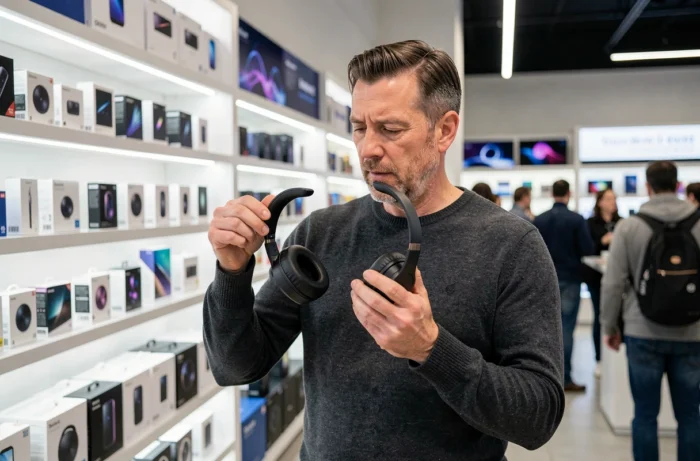
Edge data processing is no longer a concept for show. Dedicated chips for local inference embedded in the latest generations of smartwatches, Bluetooth headphones, and industrial IoT sensors enable models to run without network calls. Latency decreases, while privacy increases.
Confidential computing protects data even during processing. Hardware enclaves (TEEs) isolate sensitive calculations from the rest of the system. This approach, identified by Gartner among the strategic trends for 2026, meets a growing demand from businesses in France and Europe, where data sovereignty has become a purchasing criterion, not just a marketing argument.
The combination of edge AI and confidential computing changes the game for consumer connected devices. A Samsung watch or health band can analyze biometric data locally, without sending it to a remote server. For businesses, this means hybrid architectures where critical decisions are made as close to the sensor as possible.
Multi-agent systems: AI orchestrating other AIs
Multi-agent systems represent a shift in software architecture. Instead of a monolithic model that tries to do everything, several specialized agents collaborate, each optimized for a specific task. One agent manages information retrieval, another writes, and a third checks for coherence.
This approach addresses a concrete problem: hallucinations and reasoning errors of large language models. By breaking down a complex task into verifiable subtasks, the reliability of the outcome increases. Gartner positions multi-agent systems among the structuring trends for the next five years.
We recommend monitoring three aspects of this innovation:
- Cumulative latency: each agent adds processing time, and orchestration between agents can negate the precision gain if the network infrastructure or compute does not keep up
- Traceability of decisions: when multiple agents contribute to an outcome, identifying which one introduced an error becomes an audit challenge, particularly under the obligations of the AI Act
- Inference cost: multiplying calls to specialized models increases the cloud bill, pushing companies toward lighter specialized language models rather than generalist foundations
Smartwatches and Bluetooth wearables: what really changes on the hardware side
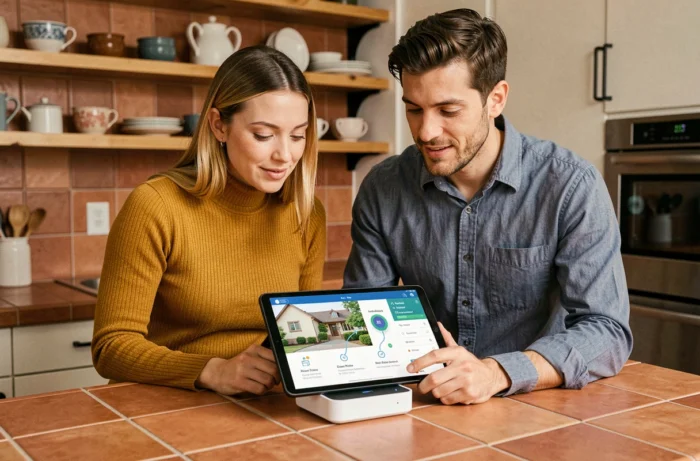
The market for smartwatches and Bluetooth wearables is entering a phase where embedded intelligence replaces simple notification displays. The latest versions integrate skin temperature sensors, body composition measurements via bio-impedance, and sleep analysis algorithms that run directly on the chip.
Samsung, with its Galaxy Watch range, and specialized players are pushing for models capable of interpreting data without relying on a smartphone. Bluetooth LE Audio improves transmission quality while reducing energy consumption, a key factor for the battery life of devices worn on the wrist.
What product listings on Amazon, Fnac, or Cdiscount do not always mention:
- The accuracy of sensors varies significantly based on skin color and wrist morphology, a topic that manufacturers are beginning to document under regulatory pressure
- The health data collected by these watches potentially falls under the high-risk AI systems regime of the AI Act, with enhanced obligations set to begin in August 2027
- Interoperability between ecosystems (Samsung, Apple, Google) remains limited, which traps the user in a platform choice that is difficult to reverse
Domestic robots and physical AI: beyond the gadget
Gartner identifies physical AI as a strategic trend for 2026. Multi-service domestic robots are no longer limited to autonomous vacuuming. Recent models combine vision-based navigation, articulated arms, and embedded language models to interpret contextual voice instructions.
The technical challenge remains the manipulation of objects in an unstructured environment. An industrial robot operates in a predictable setting. A domestic robot must handle a toy on the floor, a cat crossing its path, and an ajar door. Advances in simulation (digital twins) accelerate training, but transitioning to the real world still generates failures that marketing demonstrations do not show.
Prices remain high for truly versatile models. The market is structuring between affordable specialized robots and multi-purpose platforms positioned in a premium segment, with no real intermediate offering for now.
The convergence of European regulation, decentralized hardware architectures, and multi-agent software orchestration shapes the real tech landscape of 2026. Product announcements matter less than the technical and legal trade-offs that make them possible or delay them.