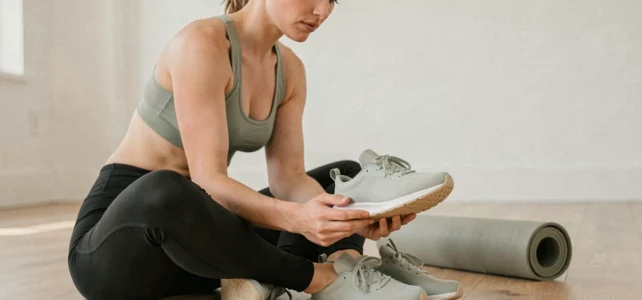
During a yoga class, the contact between the foot and the ground conditions balance, proprioception, and joint comfort. Choosing suitable women’s yoga shoes means understanding what actually happens under the arch of the foot during poses, and why a poor choice can hinder progress or cause pain.
Thin sole and proprioception: what the foot perceives during a pose
Have you ever noticed that in tree pose, the slightest wrinkle in your sock changes your balance? The foot functions as a sensor. Every extra millimeter of sole between the sole and the mat reduces the information transmitted to the brain.
See also : How to Choose the Right Telescopic Hedge Trimmer for a Perfect Garden
This is why most practitioners work barefoot. A yoga shoe is not meant to resemble a running shoe. It should offer the thinnest sole possible to preserve sensory feedback.
A so-called “minimalist” model replicates the feeling of being barefoot while protecting the skin. The sole, flexible and flat (without drop, meaning no height difference between the heel and the forefoot), allows the toes to spread naturally in grounding poses.
Recommended read : How to Choose the Right Size M for Men: Size Guide and Measurements
Before exploring recommended women’s yoga shoes on the market, it is worth understanding in which situations these models provide a real benefit compared to being barefoot.
Yoga barefoot or minimalist shoes: when the choice really matters
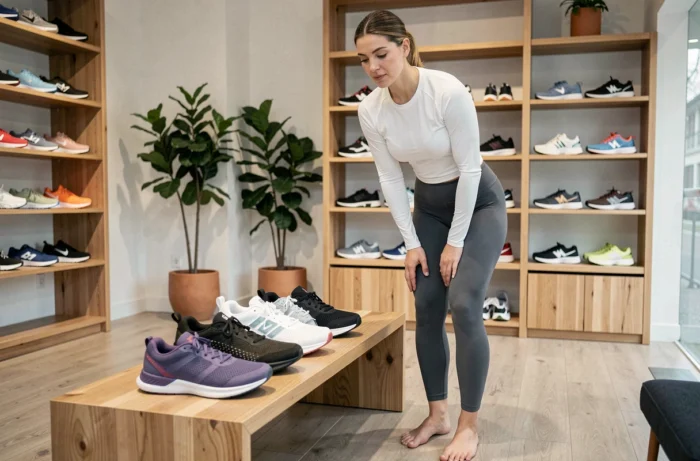
On a standard mat, in a heated room or at home, practicing barefoot remains the standard. The receptors in the arch of the foot work without filter, and the fine motor skills of the toes actively contribute to stability.
The question of shoes arises in specific contexts:
- Studio classes with hard floors (concrete, tiles) where the mat alone does not absorb prolonged pressure, especially in standing poses held for a long time.
- Outdoor yoga (park, terrace, pebble beach) where the surface is uneven or abrasive.
- Gyms that require closed shoes for hygiene reasons, as noted by several practitioners on specialized forums.
- Individuals with increased plantar sensitivity, chronic cold feet, or already diagnosed plantar fasciitis.
On mats in a temperate room, barefoot remains the best choice. The yoga shoe makes sense when the environment does not allow for this option.
Minimalist shoes for yoga: the risks of a too-quick transition
Online content often presents barefoot shoes as naturally beneficial. The medical reality is more nuanced.
A comprehensive review published in July 2026 concludes that practicing in minimalist shoes is neither clearly endorsed nor clearly rejected by sports medicine. Some benefits exist, but the data do not show a systematic reduction in injuries compared to traditional shoes.
Identified risks during a rapid transition to minimalist include Achilles tendinopathy, plantar fasciitis, metatarsalgia, and stress fractures of the metatarsals. These conditions primarily affect practitioners who abruptly switch from cushioned running shoes to an ultra-thin sole for power yoga or dynamic yoga.
In practice, the transition should be gradual. Start by wearing the minimalist model for a few minutes per session, on static poses, then increase the duration over several weeks. The foot needs time to strengthen its intrinsic musculature.
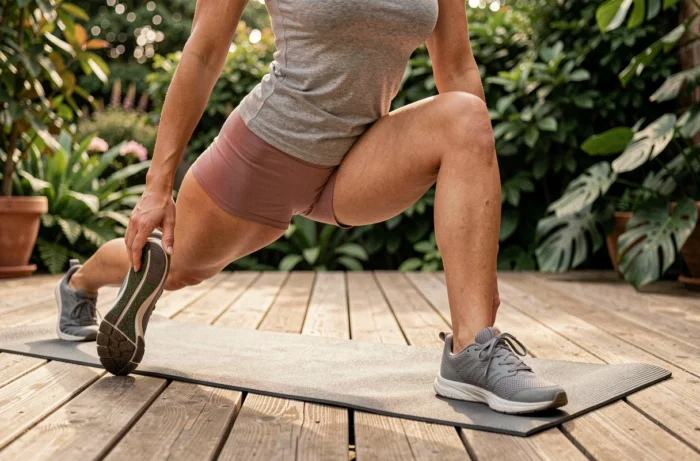
Concrete selection criteria for women’s yoga shoes
Why do some models work better than others on a mat? Four technical characteristics make the difference.
Sole grip on mats and smooth surfaces
A sole that is too smooth slips on the mat. A sole with too much grip prevents the foot’s micro-adjustments. The ideal grip comes from a soft rubber with a slightly textured finish, sufficient to hold a warrior pose without locking the foot during transitions.
Flexibility and width of the toe box
In yoga, the toes spread to stabilize the body. A model that is too narrow compresses the foot and negates this effect. Ensure that the shoe bends easily in all directions, without resistance at the forefoot.
Weight and sole thickness
A suitable yoga model weighs significantly less than a standard fitness shoe. The sole thickness remains minimal (a few millimeters), without arch support or thick foam cushioning. The goal is not to protect from repeated impact like in running, but to allow the foot to work.
Breathable material and maintenance
Yoga generates heat and sweat, especially in hot yoga. Breathable synthetic meshes or lightweight knits dry quickly. Avoid rigid leather, which does not deform with foot movements and retains moisture.
Non-slip socks: alternative or complement to yoga shoes
When the studio allows barefoot but you seek a minimum of protection, non-slip grip socks offer an interesting compromise. They maintain sensory contact with the ground while preventing slipping on the mat.
This option is particularly suitable for gentle yoga, yin yoga, or floor Pilates. For dynamic yoga with many standing transitions, the sock may shift under the foot and create instability. In this case, a minimalist shoe model with a thin sole remains more reliable.
The choice between minimalist shoes and non-slip socks therefore depends on the type of yoga practiced, the surface underfoot, and individual sensitivity. Testing both options over a few sessions remains the safest way to decide.