
The budget choices of French households are reshaping the leisure landscape in 2024. Nearly two-thirds of working individuals have sought to reduce their cultural spending over the past twelve months, prompting a rethink of how to spend free time. Instead of creating yet another list of activities, we analyze here the leisure sectors that are best resisting this contraction, and those that are gaining ground thanks to adapted economic models.
Free and low-cost leisure: the foundation that structures free time
Turning to free events, libraries and media libraries, and advertising-funded platforms is no longer a Plan B. It has become the primary reflex for accessing culture and leisure for the majority of French people, particularly those under 35.
Media libraries are experiencing a steady increase in attendance, driven by extended opening hours, the integration of digital services, and the lending of objects (musical instruments, board games, e-readers). This model of sharing is also extending to streaming subscriptions, shared within households or among friends to maintain access to music and series without multiplying bills.
Buying second-hand (books, vinyl records, sports equipment) and bartering between individuals complement these strategies. We observe that exploring leisure options on Veritaxis allows for a quick mapping of available options by category and budget, facilitating these choices.
Culture Pass and youth spending: where the money really goes
Only 7% of young beneficiaries book at least one live performance through the Culture Pass, with performance bookings accounting for only about 2% of the total spending of the scheme. Cinema captures around 21% of the amounts, and recorded music about 23%. In other words, the Culture Pass massively finances the consumption of reproducible content, not the in-person experience.
This imbalance has direct consequences for leisure sectors. Live performance venues cannot rely on this scheme to renew their audience. Bookstores, on the other hand, remain a frequent stop for young users.
Bonus for low-income households
The Culture Pass now provides an additional 50 euros for young people whose family quotient is below 700 euros. This bonus mechanism targets the audiences most distant from paid cultural offerings and guides their initial leisure choices. It remains to be seen whether this additional funding changes the distribution of spending or if it fuels the same dominant categories (music, cinema, books).
Immersive and experiential activities: escape games, workshops, urban adventure
So-called “experiential” leisure activities (escape games, creative workshops, urban adventure courses) are better resisting budgetary pressure than passive outings. Their group pricing spreads the cost, and the social dimension of the activity justifies the expense in the eyes of participants.
Escape games have diversified well beyond the classic closed-room format. There are now outdoor formats, multi-hour scenarios incorporating augmented reality, and variants designed for families with children aged 8 and up. Workshops (ceramics, cooking, artisanal crafting) follow the same trajectory: the finished product taken home extends the perceived value of the experience.
- Outdoor escape games combine urban exploration and puzzle-solving, often for a lower cost per person than the indoor format.
- Culinary or artisanal workshops offer short sessions (often less than two hours), tailored to the time constraints of working individuals.
- Adventure courses in suburban areas (tree climbing, all-terrain electric scooters, via ferrata) attract family audiences on weekends, with a marked seasonality effect between April and October.
Sports and outdoor leisure: soft mobility as a lever
Sports practice remains the most transversal leisure activity, but short and independent formats are gaining ground over annual gym memberships. Running, urban hiking, and cycling (traditional or electric) require neither reservation nor recurring financial commitment.
The development of cycling infrastructure in French urban areas has made electric bikes competitive not only as a mode of transport but as a leisure activity in its own right. Marked loops of several dozen kilometers are appearing around many medium-sized cities, designed for half-day outings.
Outdoor games and sociability
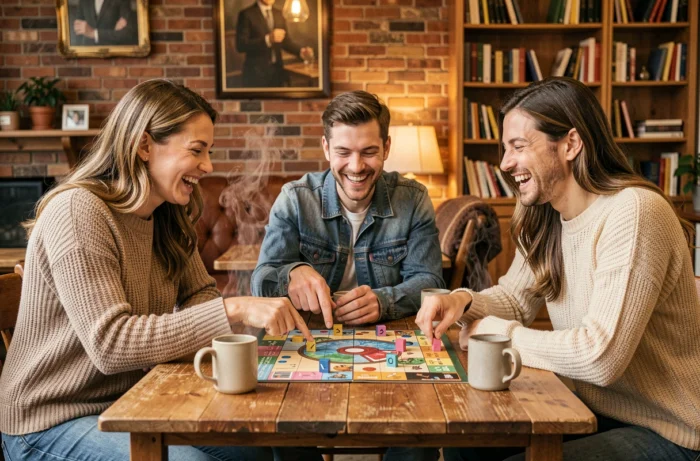
Informal collective games (petanque, mölkky, park badminton) are experiencing a resurgence of interest because they tick three boxes simultaneously: almost no cost, no prior skills required, and immediate social dimension. They are increasingly found in developed public spaces, sometimes with free loan equipment provided by local municipalities.
Concerts and music: the paradox of the French’s favorite leisure
Music overwhelmingly dominates leisure practices: nearly the entire population reports listening to it regularly. Music streaming platforms capture a significant share of the cultural budget, to the point that a notable proportion of French people find it difficult to give up.
However, live musical performances remain underfunded by public schemes aimed at young people. Concerts and festivals depend more on discretionary purchasing power than on redistributive mechanisms. In times of budget constraints, they are the first items sacrificed, even though they generate the most lasting memories according to satisfaction surveys.
- Free outdoor concerts (music festivals, municipal festivals) remain the main entry point for audiences with limited budgets.
- Buying last-minute tickets through resale apps helps reduce costs but requires flexibility.
- Small venues and café-concerts often offer tickets for less than 15 euros, with a discovery programming that builds a loyal local audience.
The choice of leisure in 2024 is less about discovery than about making choices. The French have not reduced their appetite for culture, sports, or collective experiences. They have restructured their spending around free options, sharing, and proximity. The sectors that integrate this logic into their model capture attention, while others lose ground without a decrease in the desire to participate.