
Refining your hips activates a mechanism that most fitness programs oversimplify. The hip area stores fat under the combined influence of hormones, genetics, and overall energy balance. Understanding this trio allows for setting realistic expectations and choosing the right levers, whether they are dietary or physical.
Localized fat loss in the hips: what research really shows
The concept of spot reduction, that is, the idea of burning fat from a specific area by working it, has been debated for decades. The current scientific consensus remains clear: fat loss is primarily a systemic process. When the body taps into its fat reserves, it does so globally, not just where the muscle contracts.
Recent studies slightly nuance this finding. A protocol combining a high volume of local endurance exercises with cardio has shown a somewhat more pronounced reduction of fat in the worked area among overweight men. The advantage remains modest and does not change the basic rule: without an energy deficit, no targeted exercise will melt away the hips.
The distinction to remember is between toning an area and removing fat from it. Strengthening the muscles around the hips improves posture and silhouette, but the fat layer will only decrease if diet and total expenditure create a deficit. Several resources detail the techniques for losing hips on Le Site de Julia by combining these two approaches.

Caloric deficit and diet to refine the hips
The most determining lever is not exercise; it is the plate. A moderate energy deficit, maintained over several weeks, remains the only non-negotiable condition for reducing body fat, including in the hips.
Building a deficit without frustration
An overly aggressive deficit triggers hormonal compensation mechanisms that hinder weight loss and promote muscle loss. It is better to have a moderate gap between intake and expenditure, sustainable over time, than a severe restriction abandoned after ten days.
Some concrete dietary principles help maintain this course:
- Increase the proportion of protein at each meal (poultry, fish, legumes, eggs) to preserve muscle mass during the deficit and prolong satiety.
- Reduce added sugars and saturated fats without completely eliminating them, as overly restrictive diets lead to well-documented rebounds.
- Focus on high-nutrient, low-calorie vegetables to fill the plate without blowing the balance.
- Drink enough water, as mild dehydration can be mistaken for hunger by the brain.
Dietary regularity matters more than the perfection of an isolated meal. An occasional deviation does not cancel out a week of well-managed deficit.
Exercises to refine the hips: intensity and movement choices
Since fat loss is systemic, the most effective exercises for refining the hip area are those that burn the most overall energy while engaging the muscles of the pelvic belt.
High expenditure multi-joint movements
Multi-joint exercises recruit several muscle groups simultaneously, increasing caloric expenditure per session. Three movements stand out for their ability to engage the glutes, thighs, and core:
- The squat (all variations: goblet, sumo, Bulgarian) targets the glutes, quadriceps, and adductors. The sumo version, with feet apart, emphasizes the work of the inner thigh and hip muscles.
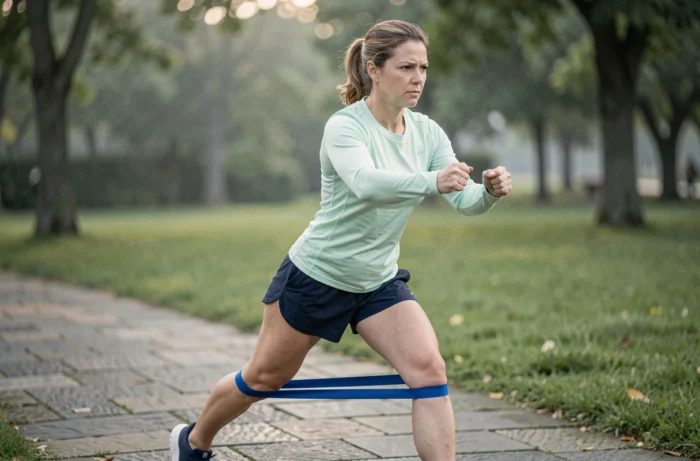
- The lateral lunge specifically targets the adductors and the gluteus medius, two muscles that sculpt the contour of the hip. The lateral movement imposes a stabilization effort absent from classic lunges.
- The hip thrust isolates the gluteus maximus and the deep hip muscles more. It can be performed with body weight or weighted, depending on the level.
Prioritizing progressive loads rather than infinite bodyweight repetitions accelerates muscle gain and keeps the basal metabolism high, even at rest.
Cardio and HIIT: the role of total volume
Continuous cardio (running, cycling, swimming) remains useful for digging the energy deficit, but its effect diminishes if the intensity stagnates. HIIT protocols (short intervals at high intensity) generate prolonged caloric expenditure after exercise due to excess post-exercise oxygen consumption.
However, HIIT imposes a higher joint and nervous stress. Two to three sessions per week are sufficient. Beyond that, the risk of overtraining increases without additional benefits for fat loss.
Hormonal and genetic factors: the limits of individual control
Gynoid morphology, characterized by preferential storage on the hips and thighs, largely depends on hormonal factors, particularly estrogen. This distribution pattern is partly genetically programmed.
Some conditions, such as polycystic ovary syndrome, alter the hormonal profile and influence fat distribution. Field reports vary on the effectiveness of standard programs for these profiles, and medical supervision may be necessary before aiming for targeted weight loss.
Accepting that the speed and location of fat loss vary from person to person avoids frustration and extreme protocols. Two people following the same program will not achieve the same results in the hips, and it is not a matter of willpower.
The most reliable parameter remains monitoring over time: hip circumference measured under the same conditions, progression of weights in the gym, quality of sleep, and energy levels. These indicators better reflect real progress than a simple number on the scale, which does not distinguish fat from muscle or water.