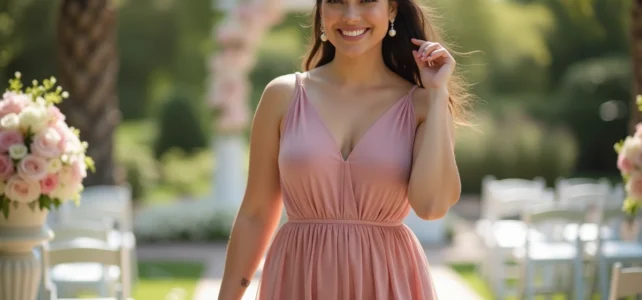
The trapeze dress is defined by a fitted cut at the shoulders and bust, then gradually flaring out to the hem. This “A” shape creates space between the fabric and the body from the waist down, making it a particularly suitable cut for curvy silhouettes for a wedding.
Photographic rendering: the criterion that morphology guides overlook
At a wedding, the dress will be photographed dozens of times, in natural light, with flash, in full sun, or under artificial reception lighting. Therefore, the choice of fabric goes beyond just comfort or how it falls on the body.
Related reading : How much to budget for decorating your wedding: tips for a controlled budget
Crape and chiffon diffuse light instead of creating spot reflections on volume areas. A very shiny satin, on the other hand, captures light and creates white spots on the belly or hips, visually accentuating curves in photos.
For a trapeze dress worn as a guest, opting for a soft-reflecting fabric helps smooth the silhouette in group photos as well as in portraits. This criterion should guide the choice even before considering color or pattern. The complete guide to choosing a trapeze dress for curvy women at weddings details fabric-light associations according to the type of ceremony.
Read also : How to Choose the Right Telescopic Hedge Trimmer for a Perfect Garden
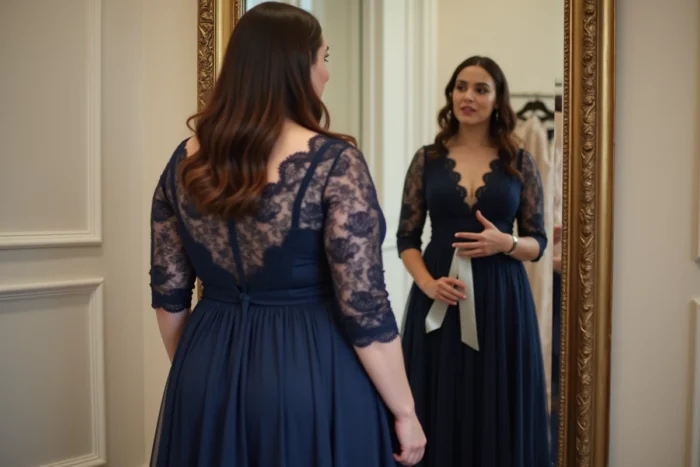
Body shape and trapeze dress: adapting the cut to your comfort zone
Not all curvy silhouettes are the same. The term “curvy” encompasses very different body types, and the trapeze dress is not worn in the same way depending on whether the volume is concentrated on the belly, hips, or bust.
Volume centered on the belly
The trapeze dress is the most logical cut in this case. The flare starts just below the bust or at the natural waist, allowing the fabric to float without clinging to the belly. An empire waist on a trapeze dress hides the belly without compressing.
The material should have enough structure to avoid sticking to the body with wind or when sitting. A thick crape or lined chiffon works better than a thin jersey that tends to cling to every fold.
Wide hips and strong thighs
The trapeze dress naturally balances the silhouette by widening the visual line from the shoulders. To enhance this effect, a midi length (below the knee) is more flattering than a short dress that stops at the widest part of the thigh.
Generous bust
A common trap is choosing a trapeze dress that is too loose at the top to “compensate” for the bust volume. The result is a tent-like silhouette. The top of the trapeze dress should remain fitted to the bust so that the flare produces its structuring effect. A V-neck elongates the bust and avoids the “block” effect.
Fabrics and technical finishes for plus-size trapeze dresses
The choice of fabric determines both the silhouette and the cut itself. Here are the materials that work with the trapeze geometry on a curvy body:
- Polyester crape or viscose crape: fluid drape with enough structure to avoid clinging. Suitable for both daytime and evening ceremonies.
- Lined chiffon: lightweight and flowing, particularly suitable for summer weddings. The lining prevents transparency and adds support.
- Textured cotton (English embroidery, light jacquard): a more casual option for a country wedding, with the advantage of a fabric that doesn’t stick to the skin in hot weather.
- Lace on an opaque background: lace applied to a matte background creates a play of textures that distracts from volume. Reserve stretchy lace for the top of the dress only.
Fabrics to avoid include smooth satin (too reflective), thin jersey without lining (clings to the belly), and wrinkled linen (distorts when sitting, which is a significant part of the day at a wedding).
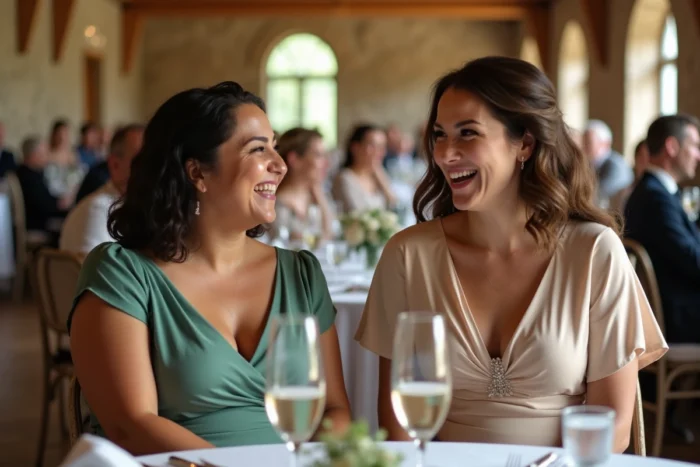
Length and accessories: details that change the silhouette in a trapeze dress
The length of the trapeze dress radically alters the effect produced. A mid-calf dress elongates the silhouette and remains practical for dancing. A long dress adds elegance but requires heeled shoes to avoid stepping on the hem, which can be problematic for an entire day.
The midi length, just below the knee, is the best compromise for a curvy guest. It exposes the lower leg (often the thinnest area) and maintains the flare of the trapeze cut at its maximum amplitude.
For accessories, a thin belt placed at the natural waist or just below the bust creates a visual reference point that structures the silhouette. Be cautious with wide belts that cut the bust in half and shorten the torso.
Fitting: concrete gestures to avoid mistakes
Trying on a trapeze dress for a wedding requires some precise checks:
- Sit for several minutes and check that the fabric does not ride up on the belly. The trapeze cut should maintain its flare even when sitting.
- Raise your arms above your head: if the dress rises more than a few centimeters, the armhole is too tight or the waist is too short for the bust.
- Walk a few steps and observe if the fabric clings to the thighs due to static electricity. If so, plan for an anti-static spray or change the material.
- Take a photo with the phone flash to spot reflective areas on the fabric, particularly around the belly and hips.
Trying on with the Day J underwear is essential: a different bra alters the positioning of the bust and thus the fall of the entire upper part of the dress.
The last point to check is the color. Dark and solid shades slim, but medium tones (terracotta, duck blue, sage green) work just as well on a trapeze dress, as the cut already does the structuring work. Choosing the color based on the wedding theme rather than a “slimming” reflex yields a more accurate and elegant result.